Introduction
Shipping delicate objects such as glassware, electronics, or artwork requires a systematic approach to prevent breakage. This guide will teach the reader how to protect fragile items from impact, vibration, and moisture throughout the transit journey. By following each step, one can achieve a professional level of packaging that reduces the risk of costly replacements. The information presented is valuable for anyone who ships personal belongings, runs an e‑commerce store, or assists friends with moving.
What You'll Need
- TICONN Extra Large Moving Bags – 6‑pack, 27" x 14" x 15", 24‑gallon capacity, 100 lb load limit, water‑resistant, 4.8★ rating (45,602 reviews). Price not listed.
- FYGRIP Heavy‑Duty Moving Bags – 6‑pack, 29" x 14" x 13", 23‑gallon capacity, holds up to 65 lb, puncture‑free, waterproof, 4.8★ rating (11,261 reviews), $23.98.
- Bubble wrap, packing peanuts, kraft paper, packing tape, scissors, marker, and sturdy corrugated boxes (double‑wall recommended).
Step 1: Prepare Your Packing Area
Designate a clean, flat surface large enough to accommodate the largest box you will use. Remove any debris that could puncture protective materials. Lay a sheet of kraft paper on the floor to protect both the floor and the bottom of the box from moisture. This preparation creates a controlled environment that minimizes accidental damage before the actual packing begins.
Step 2: Create a Cushion Base
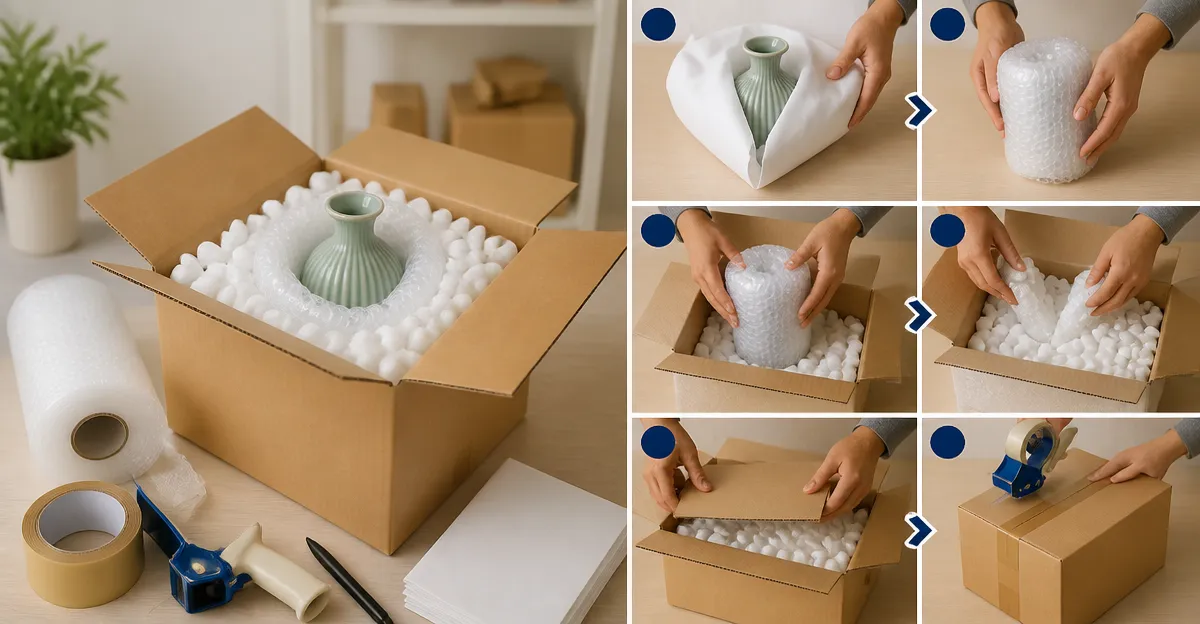
Place a layer of packing peanuts or crumpled kraft paper at the bottom of the box, extending at least two inches from each side. This base absorbs shocks from handling and from the vehicle's movement. For added protection, line the base with a sheet of bubble wrap, ensuring the bubbles face upward to cushion the items directly.
Step 3: Wrap Each Fragile Item Individually
Wrap each piece in at least three layers of bubble wrap. Secure the wrap with a short strip of packing tape, but avoid taping directly to the item's surface. For glassware, place a piece of cardboard between the item and the wrap to prevent pressure points. The multiple layers disperse impact forces, reducing the likelihood of cracks.
Step 4: Pack Items in Logical Groups
Arrange similarly sized items together, placing heavier objects at the bottom and lighter ones on top. Fill any gaps with additional packing peanuts or crumpled paper to prevent movement. If you are moving a large number of non‑fragile belongings alongside the delicate items, consider using the TICONN Extra Large Moving Bags to separate them. These bags can hold up to 100 lb and are water‑resistant, keeping bulk items dry and out of the way of the fragile cargo.
Step 5: Secure the Box Top
After all items are snugly placed, add a final layer of cushioning material on top, then close the box flaps. Reinforce the seams with at least two strips of high‑quality packing tape, extending the tape at least two inches beyond the box edges. This reinforcement prevents the box from opening during handling.
Step 6: Label and Add Handling Instructions
Write “FRAGILE – HANDLE WITH CARE” in bold letters on each side of the box using a permanent marker. Attach a “THIS SIDE UP” label if orientation matters for the contents. For extra visibility, affix a bright-colored sticker. Proper labeling alerts carriers to treat the package delicately, reducing mishandling.
Step 7: Use an Outer Protective Container (Optional)
If the shipment will endure rough conditions, place the sealed box inside one of the FYGRIP Heavy‑Duty Moving Bags. These bags feature reinforced stitching, strong zippers, and wide webbing handles that distribute weight evenly. Their puncture‑free, waterproof construction shields the inner box from moisture and impacts during transit, offering an additional layer of security.
Tips & Pro Tips
- Test the box by gently shaking it; if you hear movement, add more filler.
- Use double‑wall boxes for especially heavy or valuable items.
- Seal the box with a “tamper‑evident” tape strip to detect any unauthorized opening.
- When shipping multiple fragile items, consider separating them into individual boxes to limit cumulative damage.
- Store packed boxes in a climate‑controlled area if they will sit for an extended period before shipping.
Troubleshooting
Problem: Items shift during transport.
Solution: Re‑open the box, add more cushioning material, and ensure each item is individually wrapped. Verify that the box size matches the contents; a box that is too large will allow movement.
Problem: Exterior of the box becomes wet.
Solution: Place a waterproof liner, such as a heavy‑duty polyethylene sheet, inside the box before adding items. Alternatively, use the FYGRIP Heavy‑Duty Moving Bags as an outer waterproof barrier.
Conclusion
By following this structured approach, one can significantly reduce the risk of damage when shipping fragile items. The combination of proper cushioning, strategic placement, reinforced sealing, and clear labeling ensures that the package arrives in the condition intended. Whether shipping a single heirloom vase or a batch of electronics, the principles outlined here provide a reliable framework for safe delivery.
Products Mentioned in This Guide
TICONN Extra Large Moving Bags
Rating: 4.8★ (45,602 reviews)
Features: 27" x 14" x 15", 24‑gallon volume, 100 lb capacity, water‑resistant, durable PE material, fold‑flat storage.
Price: Not listed
FYGRIP Heavy‑Duty Moving Bags
Rating: 4.8★ (11,261 reviews)
Features: 29" x 14" x 13", 23‑gallon volume, holds up to 65 lb, puncture‑free, waterproof, reinforced stitching, strong zipper, wide webbing handles.
Price: $23.98
Frequently Asked Questions
What materials are essential for packing fragile items safely?
Use bubble wrap, packing peanuts, kraft paper, sturdy corrugated boxes, packing tape, scissors, and a marker.
How should I wrap glassware to prevent breakage during shipping?
Wrap each piece in several layers of bubble wrap, secure with tape, and place it in a box surrounded by packing peanuts.
What is the best way to fill empty space inside a box?
Add packing peanuts or crumpled kraft paper to cushion items and prevent movement.
How can I protect fragile items from moisture during transit?
Choose water‑resistant moving bags or boxes and include a dry‑pack or silica gel packets.
Are moving bags like TICONN or FYGRIP suitable for shipping delicate objects?
Yes; both are water‑resistant, sturdy, and have high load limits, making them good for protecting fragile items.